Table Of Content

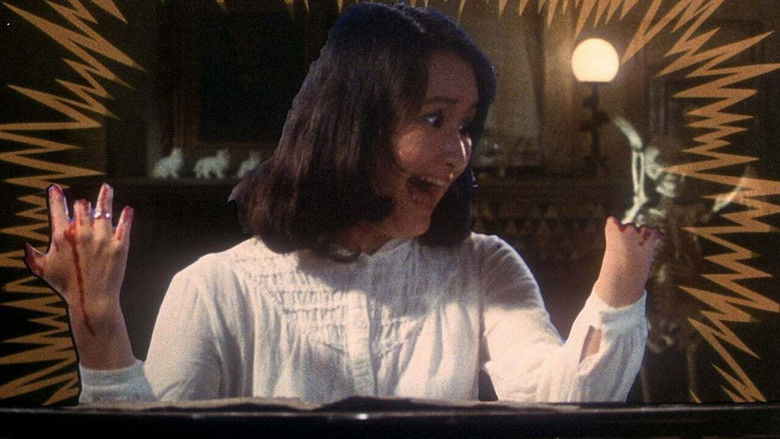
The girls try to find the aunt to unlock the door but discover Mac's severed hand in a jar. Melody begins to play the piano to keep the girls' spirits up and they hear Gorgeous singing upstairs. As Prof and Kung Fu go to investigate, Melody's fingers are bitten off by the piano, and it ultimately eats her whole. Click here to read The Hollywood Insider’s CEO Pritan Ambroase’s love letter to Black Lives Matter, in which he tackles more than just police reform, press freedom and more – click here.
“I Didn’t Make the World, I Only Live in It:” Considering Oscar Levant
The visual wonder of ‘Hausu’ comes from how the film avoids realism in favor of outlandish imagery and surrealism. The visual approach in the film is more based on a childish playfulness than a desire to look realistic. Obayashi does every trick in the books for the visual effects of the film, from animation mixed with live action to rapid-paced editing to whatever this is. While this visual style may seem disorienting at first, it soon immerses the audience in a viewing experience like no other.
s ‘Hausu’: The Funnest Haunted House Movie
Like a cat which materializes one day on Oshare’s window sill, spews blood in another scene, and plays the piano in reverse. It’s no coincidence that the music is so closely tied to the moods of the girls. House’s soundtrack had been finished a year before Obayashi shot the film, and when he found himself struggling to give effective verbal direction to the novice actresses, he played the soundtrack for them as they acted out the scenes. In “Constructing a House,” Obayashi mentions that the actresses “belonged to a younger generation that found it easier to express emotion through chords, melodies, and rhythms than through words. House tells the story of high school ingenue Gorgeous, who embarks on an ill-fated summer vacation with her six friends to her aunt’s lonely house in the countryside.
Top 10 Best 70’s Horror Films

The surreal comedy-horror bit is often trumped by absurdist melodrama with an incomprehensible plot encompassing demonic possession, ESP, telekinesis, and cannibalism. Obayashi was a director of TV commercials before this full-length feature and in many ways it shows. There is a glossy glow to everything and an obsessive attention to detail that allows even his greatest missteps to seem somehow intentional and (usually) technically sound. A schoolgirl and six of her classmates travel to her aunt's country home, which turns out to be haunted.House featuring Kimiko Ikegami and Miki Jinbo is streaming on MAX, streaming with subscription on The Criterion Channel, available for rent or purchase on iTunes, and 3 others. It's a comedy and mystery movie with a better than average IMDb audience rating of 7.3 (32,366 votes). It’s a film that is as frustrating as it is enlightening; perhaps a misguided masterpiece, perhaps excessively self-indulgent, but more creative and comprised of more vision than most of the horror films made in the past thirty years.
Although all of House’s music is evocative, its leitmotif is the Rosetta Stone to understanding its complex attitude toward romance, youth, and the specter of post-war Japan that looms over them. It’s initially used as a malleable, expressionistic representation of how the girls are feeling at any point in time, often warm and jovial with a strongly nostalgic character. At the halfway point, however, the leitmotif enters the film’s diegesis in the form of a music box, changing from an emotional signpost into an icon of wartime grief. Its appearance signals a turn in both the girls’ understanding of their dire circumstances and the viewer’s understanding of how House uses music to create a false sense of comfort. Through Godiego’s young hands, Obayashi inspires feelings of romantic warmth and hope as we get to know the girls, only to cast doubt on the meaning and validity of those feelings once the horrors of Auntie’s house obliterate their youthful illusions.
Director
Obayashi’s collaborator Asei Kobayashi wrote the score, but Kobayashi conceded early on that he was “too old” to do justice to a firecracker like House, so the two called in 25-year-old Mickie Yoshino and his band Godiego to actually arrange the tunes. The resulting soundtrack, like the film itself, attempts to span the generation gap by putting each generation’s outlook into paradoxical dialogue. The reading is interrupted by the giant-sized head of Gorgeous, who reveals that her aunt died many years ago while waiting for her fiancé to return from World War II. As Kung Fu lunges into a flying kick, she is eaten by a possessed light fixture. Kung Fu's legs manage to escape and damage the painting of Blanche on the wall, which in turn kills Blanche physically. Prof tries to read the diary, but a jar with teeth pulls her into the blood, where she dissolves.
The unpredictable quality of the film adds to the horror since the audience never truly knows what to expect. There is not one moment in the film that will make the audience roll their eyes and say “of course, I saw that coming a mile away”. Quite the contrary, there are outlandish visuals and moments in the film that will make the audience wonder how the heck that even happened, like a man turning into a pile of bananas. The visual wonder of ‘Hausu’ will keep audiences glued to the screen while causing them to never expect what will happen next.
The encounter is initially disregarded by the other girls, but over time they also begin to encounter other supernatural traps throughout the house. Hollywood Insider is a media network thatfocuses on substance and meaningful entertainment/culture, so as to utilize media as a tool to unite and better our world, by combining entertainment, education and philanthropy, while being against gossip and scandal. Seven girls on their summer trip pay a visit to a possessed house which plans to eat them in extremely bizzare and surreal ways. The film, which received generally negative reviews, was a box office hit in Japan.
Auntie’s fractured reflection weeps blood, a sinister cackle resounds, and Gorgeous, shellshocked, is consumed by ghostly flames. The leitmotif’s musical simplicity grants it an immediately recognizable quality, which primes the viewer for its approximately 20 appearances in various permutations throughout the film. This creates an orienting locus of stylistic uniformity amidst the film’s immediate visual carnage. It first appears immediately after the title cards; Gorgeous is shrouded in a sheet for a photo shoot in a candle-lit, empty classroom. Pairing the leitmotif with talk of witches and horror offers a microcosm of the film’s emotional span there in its first two minutes.
At the midpoint of the film, she enters Auntie’s room and sits at a vanity adorned with tokens of youthful beauty—makeup, fancy hairpieces, a photo of a lover long since passed. She finds a powder compact music box which, when opened, plays the now-familiar House leitmotif. At the same time, a piano downstairs calls out to her musically-oriented friend Melody. After briefly studying the sheet music, Melody begins to play the leitmotif as well. Gorgeous, music box still open, watches as her reflection turns into her aunt’s, whose face twists into a terrified scream before the mirror shatters.
Even after the flesh perishes, one can live in the hearts of others together with the feelings one has for them. Therefore, the story of love must be told many times so that the spirits of lovers may live forever. Reelgood is the most extensive streaming guide in the US and UK, with every TV show and movie available online.
Nobuhiko Obayashi, director of cult horror movie House, dead at 82 - The Week
Nobuhiko Obayashi, director of cult horror movie House, dead at 82.
Posted: Fri, 10 Apr 2020 07:00:00 GMT [source]
Hausu is a gleeful and playful look at the demented, a fun and engaging experience that any horror fan will love. While ‘Hausu’ is an extremely rewatchable film no one will forget their first time watching the mind-bending treat. To this end, music and the transitory emotional states that music induces are illusions, fantasies, temporary self-regulations that allow us a few minutes to negotiate reality’s waking contradictions…but they’re only illusions insofar as the whole of human perception, generation to generation, is also illusory. The “love” that keeps Auntie infinitely suspended in the house, and the youth and beauty foregone as she sat waiting for that love, are illusions. The adventurous horizons and unblemished romance promised to a post-war generation, on which she feeds to sustain her bitter unlife, are illusions. What Obayashi allows us to do through the soundtrack is cope with the eternal war between these opposed illusions, our fears and our futures, by reconciling them rather than turning away from them completely.
In a world where every horror film is trying to be more realistic than the last, ‘Hausu’ is a refreshing change of pace, favoring a child-like whimsy to the boring reality that we live in. But reality itself is subject to distortion; those things once thought unreal often come storming into our lives without a moment’s notice, like an atomic cotton-candy bloom turning hundreds of thousands of lives into dust. Within the span of human existence, everything is permissible, and the incomprehensible often comes to haunt us, just as an incomprehensible horde of monsters haunts Gorgeous and her friends. Although Obayashi is quick to textualize his observations about the differences in perception between younger and older Japanese moviegoers—“it’s like a cotton candy!


No comments:
Post a Comment